
Quantum Community
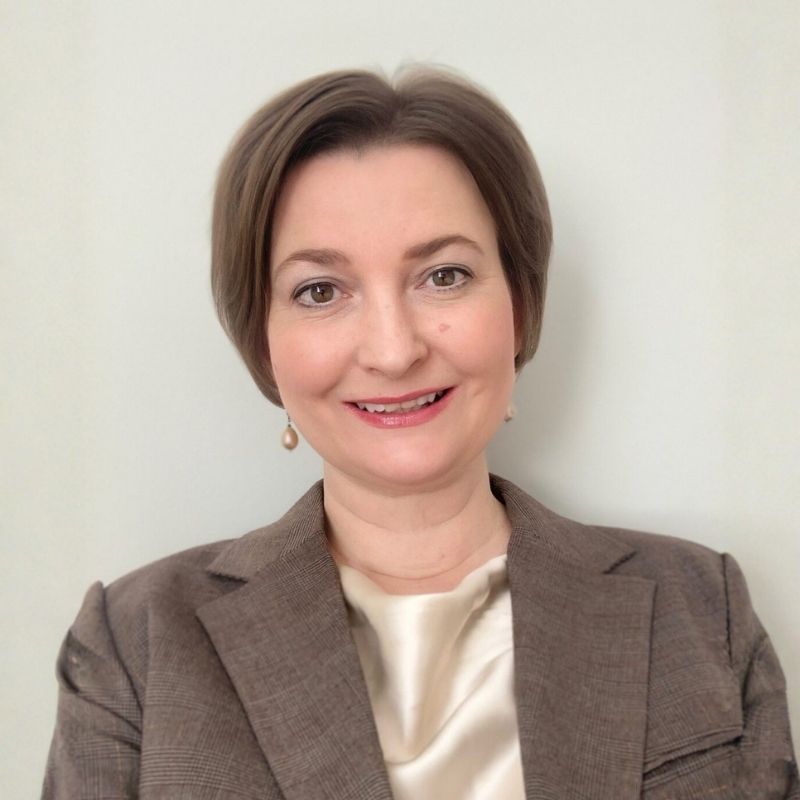 This year the United Nations is celebrating the 100th anniversary of quantum physics, so we wanted to know more about the quantum computing environment in other countries. We chose Denmark as our destination, where we spoke with Kristine Helen Falgren.
What is Danish Quantum Community?
Danish Quantum Community (DQC) was launched in 2021 in Niels Bohr’s famous Auditorium A. The community originated some years earlier however, as a collection of researchers striving to amplify the voices of the Danish quantum ecosystem both nationally and internationally.
As of today, DQC spans 65 partners from all parts of the Danish quantum ecosystem. With representatives from world-leading research hubs at Danish universities, quantum startups, established companies, end-users, investors and industry associations. DQC is a non-profit.
What is your mission and vision?
Our mission is most importantly to secure the best framework conditions for research and innovation in Denmark together. When the DQC was formally established, the first key goal was to ensure governmental support for the quantum agenda. Even though Denmark had one of the strongest academic research environments in the world and several other European countries had put forward national strategies Denmark was not yet invested on a governmental level in the quantum agenda.
Therefore the DQC, was very much carried by individual researchers and put forward the Danish Quantum Agenda in 2021. With key support from the Danish IT Association among others and strong engagement by the Danish Foreign Ministry, who experienced an increasingly high level of interest from foreign companies to invest in Denmark, a push was made to engage more ministries and more stakeholders to support that funding was allocated to a National Strategy.
What helped shape the strategy and make it a reality?
From the early work in DQC and until the National Strategy for Denmark was put forward several orthogonal developments was conducive in making the need for a national strategy more imminent.
First, more countries started to approve and allocate funding to quantum technology creating an urgency to invest; otherwise, it would be difficult for Denmark to sustain and leverage its historically strong quantum research to be able to compete and benefit socially and economically from the 2nd quantum revolution. Secondly the war in Ukraine and pressure from the Trump Administration changed the perception of the necessity to increase defence spending which again affected the legality of government funding to R&D (Research and Design) being allocated into dual use technology. Thirdly, the huge efforts to create awareness among political stakeholders and industry by stakeholders had prepared the ground and receptiveness for more action.
What was the focus of the Danish National Strategy?
The National Strategy in Denmark was put forward in 2023 in two parts.
Part 1 focuses on a DKK 1 billion investment from 2023-2027 to strengthen research and innovation, including a new strategic program and improved access to quantum infrastructure. Part 2, launched in late 2023, focuses on commercialization and security by strengthening the quantum ecosystem, supporting business, and fostering international cooperation, with additional funding of DKK 200 million from 2024-2027.
The strategy is intended to constitute a dynamic framework which can continuously support the various stages of development towards use, and it is acknowledged that unexpected demands or challenges may arise along the way and that we must adapt. The strategy is ambitious, and the goal is for Denmark to have one of the world's leading quantum research environments and to be able to effectively translate research into new usable technology.
ReCIN
A cooperation agreement was recently signed between the Nordic Council of Ministers to increase cooperation between the Nordic countries in quantum technology. A first step in this direction is support for joint Nordic projects and in September, funding was awarded to two pilot projects, including one in which DQC will work with QSIP (Quantum Sweden Innovation Platform) and InstituteQ in Finland.
The goal of the ReCIN pre-project is to identify use cases based on quantum technologies supporting the improvement of resiliency for critical infrastructures in the Nordics. The use cases will be selected to showcase early usage of quantum technologies to improve the resilience of critical infrastructures of importance to the Nordic societies, such as water supply, energy supply, telecommunications, and navigation system. Already now companies like Kongsberg, Fortum, Volvo, Orsted and more have contributed with input on use cases.
The ReCIN project partners are currently looking to identify Nordic-use cases, participants, and technologies that meet the following criteria:
- Use-cases that will improve resilience of relevant critical infrastructure in the Nordics which is based on quantum technology
- Use-cases that are suitable to increase awareness among Nordic end-users
- Technologies which could be ready for field trial in 2027
Icelandic stakeholders are welcome to reach out to DQC if they would like to be engaged.
What does quantum in Denmark look like today?
Today Denmark has a strong and growing ecosystem and several large milestones that is part of the national strategy has been implemented or are being implemented. Many of these are complemented and made possible with string support from especially the Novo Nordic Foundation and other Danish funds:
- Soon Denmark will get one of the world's most powerful and commercially available gate-based quantum computers. It will compliment Gefion, Denmark’s AI supercomputer.
- Denmark announced 55North in October this year; the world’s largest dedicated pure-play quantum VC. The fund is anchored by EIFO (the Export and Investment Fund of Denmark) and Novo Holdings. Fully capitalized they will have €300 million to invest not only in Denmark but globally.
- Several initiatives have been launched to forge stronger bilateral collaborations and MoU’s (Memorandum of Understanding) has been signed with several likeminded countries such as the UK and Japan. More MoU’s are on the way and the focus is on collaboration on talent exchange, research, innovation, commercialization, security and defence.
- Initiatives have also been launched to strengthen commercialisation of research (e.g. Quantum House Denmark which is a part of the national strategy) and under DeIC (Danish e-infrastructure Consortium) funding is allocated to build competences in academia and industry to leverage HPC and quantum computing infrastructure in their work.
I could mention many more developments such as the establishment of more new companies, foreign companies working with quantum technology or enabling technology establishing their businesses in Denmark, existing companies such as Microsoft expanding their quantum R&D with new labs and of course the NQCP program - Novo Nordisk Foundation Quantum Computing Programme.
With a grant from the Novo Nordisk Foundation of DKK 1.5 billion over 12 years, researchers at the Niels Bohr Institute of the University of Copenhagen are striving to build a full-scale generally applicable quantum computer before the end of 2034.
On the use case side, we have mapped 16 Danish Quantum Use Cases together with the Danish Business Authority which you can download on our webpage. It gives a good picture of where we are research and industry wise.
What are the challenges moving forward?
Denmark is now almost halfway through the current period and soon we will take stock on the progress and impact of efforts funded as part of the Danish National Strategy.
In DQC we have commenced work to engage our academic and industrial partners to work on a proposal for a Quantum Agenda 2.0 to the Danish government and this will be a complicated task. A new strategy will have to be aligned not only to the EU Quantum Strategy and forthcoming Quantum Act but also an increasingly competitive global landscape.
At one hand we are competing with one another within the EU to build on our national areas of research excellence to create companies, secure 1st mover advantages for our local companies and future industrial positions of strength in a future quantum economy. But we also need to find communalities within Europe and build partnerships to be able to compete globally. The rationale is that no country can build quantum alone and full supply chains; this is a joint international effort.
What is Promote, Partner, Protect?
“Promote, Partner, Protect” is a three-pillar approach to European Economic Security, launched in 2023 to enhance the EU's competitiveness while safeguarding its interests. Promote focuses on boosting the EU's competitiveness, technological edge, and innovation. Protect involves using tools to shield against economic risks, such as those to critical supply chains and technology security. Partner aims to strengthen cooperation and dialogue with partner countries on mutual economic interests. The same balancing needs to happen at national level towards the EU, and it is not trivial.
It is my opinion that it will be complicated to secure alignment within the EU to collaborate first and foremost within the EU and agreement on who constitutes trusted communities does not necessarily match.
MAGNE
EIFO and the Novo Nordisk Foundation have decided to invest almost DKK 600 million in establishing a new Nordic quantum venture called QuNorth. None of the Nordic countries currently have the latest generation of quantum computers, and QuNorth will therefore purchase the world's most powerful commercial quantum computer. The computer will be named Magne, inspired by Norse mythology.
Magne will be one of the world's very first level 2 quantum computers, which is characterized by performing calculations using so-called logical qubits. Magne, which is based on neutral atoms, is provided by a partnership between Microsoft and Atom Computing, both world-leading companies in quantum technology that already have a strong Danish presence. Microsoft has already invested more than DKK 1 billion in building its global innovation centre for quantum technology in Denmark.
In addition to the main task of running Magne, QuNorth will work purposefully to serve researchers and business with the new technology, including by developing new application possibilities within, for example, material and chemistry-related product development, and by contributing to attracting talent and new quantum investments to the Nordic region. The ambition is to make Denmark and the Nordic region world leaders in the quantum field. Nordic companies and researchers, including Icelandic, will thus be given priority in terms of access to Magne.
What other challenges do you see?
With the immense amount of funding being allocated to quantum there is also pressure on finding use-cases and ultimately quantum economic advantage. You must convince taxpayers why billions continuously should be invested into quantum at a time where many other agendas such as the green transition, a changing geopolitical climate forging defence spending are giving high priority.
The main argument for a continuous investment into quantum is of course that there indeed is a global race to master and control quantum technology and that we must invest to be able to defend ourselves against threats from not likeminded countries utilizing these technologies to build offensive capabilities.
The other argument for continuous investments is, on a more optimistic note, that the companies who will be able to use quantum technologies and in particular quantum computing to optimize their business operations and solutions will get a competitive advantage. Several large consultancy companies estimates that the main value creation from quantum computing will be at the end-user level; e.g. to pharmaceutical companies that will be able to identify potential drug targets faster and thus cut significant R&D cost. Or for financial companies that can derisk e.g. insurance products or optimize investments.
In other words, the predictions are, that it won't be the companies that builds quantum computers or companies building quantum computing platforms and software that will get the largest piece of the cake. I am not sure that this holds true. There will be winning technology platforms and potentially quantum computing platforms dedicated for solving types of computational problems that could take similar positions in quantum as e.g. Nvidia in AI. In many ways I think quantum computers will be and already are being perceived as critical infrastructure and therefor will be immensely valuable.
Looking at some of the largest quantum companies in the world today they already have very high valuations; PsiQuantum is e.g. valued at a $7 billion post-money valuation following a funding round in September 2025. IonQ, a publicly traded company, had a market capitalization of approximately $24.5 billion as of October 2025. This doesn’t reflect solid sales however and some warn that what we are seeing is very much driven by hype. Rigetti’s stock – another quantum computing company – has risen more than 5000% in one year.
Why should we pursue quantum computers? Is it just hype?
Beside the economic value creation quantum technology can have significant positive societal impact and help us solve problems which we can’t use with technology that we have available today. If we manage to build fault tolerant quantum computers or more accurate quantum sensors then we can potentially also become better at discovering, diagnostician and treating serious diseases with new drugs at a faster pace, develop better navigation tools and build more secure communication platforms just to name a few use cases.
What are DCS’s recommendations to support the further development of quantum technology in Denmark?
In DQC our focus will be to advice government on how to invest more strategically and long term so that Denmark can obtain economic and societal value from quantum technology.
I anticipate that key recommendations will be to avoid stop-go funding and ensure predictability for academia, industry and investors, and proposing measures that secures the development of use cases and ensure that we can go from lab to fab. We will also insist on responsible and inclusive use of quantum technology. Finally, we are very much focused on strengthening Nordic collaboration which we consider to be a natural first broader multineural effort to pursue due to our joint cultural heritage.
Where do you see the challenges and opportunities for Iceland?
Iceland is already quite engaged in Nordita (The Nordic Institute for Theoretical Physics) that promotes stronger collaboration on education and research across the Nordics. As the quantum research community is small in Iceland and you haven’t got large research groups in quantum physics there is most likely other research areas which you could leverage to contribute and obtain value from the rapid developments through collaboration with other countries and/or regions.
The main thing is to start formulating a strategy; I am convinced that a clear quantum strategy will be good for research, education and innovation in Iceland – and for Icelandic security, value creation and competitiveness as well.
In DQC we already work closely together with ecosystem partners in the other Nordic countries and would welcome collaboration with Icelandic stakeholders as well.
Blaðið Tölvumál
Skil á efni
Leita í vefútgáfu Tölvumála
Um Tölvumál
Tölvumál - tímarit Skýrslutæknifélags Íslands er óháð tímarit um tölvutækni og hefur verið gefið út frá árinu 1976.
Vefútgáfa Tölvumála birtir vikulega nýja grein á vef Ský og árlega er gefið út veglegt prentað tímarit undir nafninu "Tölvumál" þar sem fjallað er um tölvutækni frá ýmsum sjónarhornum og er þema blaðsins jafnan valið snemma árs og útgáfa að hausti.
Ritnefnd Ský sér um að afla efni í Tölvumál og geta allir sem áhuga hafa sent inn efni.